

Discover the wide range of applications for UPA Pack's protective profiles
In today’s globalized economy, efficient transportation and warehousing processes are critical to the success of industrial companies. However, one of the biggest challenges remains preventing damage during transit. Damaged goods not only incur direct costs for replacement or repair, but also lead to dissatisfied customers, delivery delays, and can cause lasting damage to a company’s reputation.1
As supply chains become increasingly complex and the e-commerce sector continues to grow—often resulting in more frequent handling and shorter delivery times—the demand for robust and intelligent packaging solutions is constantly rising.3 This is where UPA Pack comes in: As a specialist in customized and sustainable protective packaging made of paper, the company offers innovative profiles that go far beyond conventional edge protection and address specific challenges across a wide range of industries.5 This article highlights the diverse applications of UPA Pack’s flat profiles and U/L profiles and demonstrates how they not only protect products but can also contribute to sustainability and increased efficiency. After all, sustainability is no longer just an optional extra but is increasingly becoming a fundamental requirement—both due to legal frameworks, such as the German Packaging Act (VerpackG) or the European Packaging and Packaging Waste Regulation (PPWR), and due to customers’ growing environmental awareness.7
UPA Pack's protective profiles in detail: Flexible, Sustainable, Custom-made
UPA Pack specializes in providing shipping protection solutions that are not only effective but also eco-friendly and tailored to customers’ specific needs. The company focuses on flat and U/L-shaped profiles made from 100% recycled paper.6
Flat profiles: The all-rounders for surfaces and textures
UPA Pack’s flat profiles are truly versatile when it comes to protecting delicate surfaces and structuring packaging units. Made from 100% recycled paper, they underscore our commitment to sustainable packaging solutions.6 Their primary functions include use as cut-resistant inserts and as spacers between stacked goods, particularly for sheet materials such as wood, plastic, metal, or glass, to prevent scratches and dents.6 In addition, they are used in the construction of disposable load carriers and as stabilizing elements in more complex system packaging.6
A key advantage of flat profiles is their high degree of customization. Customers can choose between a standard brown cover sheet or a colored one. For applications where moisture is a concern—such as in cold storage or outdoor storage—a water-repellent PE coating is available.6 A single- or double-sided self-adhesive feature makes it much easier to apply and secure the profiles, thereby speeding up packaging processes.6 Last but not least, custom printing—such as a company logo or handling instructions—provides an additional branding or informational function.6
U/L Profiles: Smart Edge and Corner Protection
UPA Pack’s U/L profiles are also made from 100% recycled paper and are primarily designed to provide robust protection for the edges and corners of delicate items.6 They effectively prevent strapping bands from cutting into the packaging and protect against impacts and damage during transport and storage.6
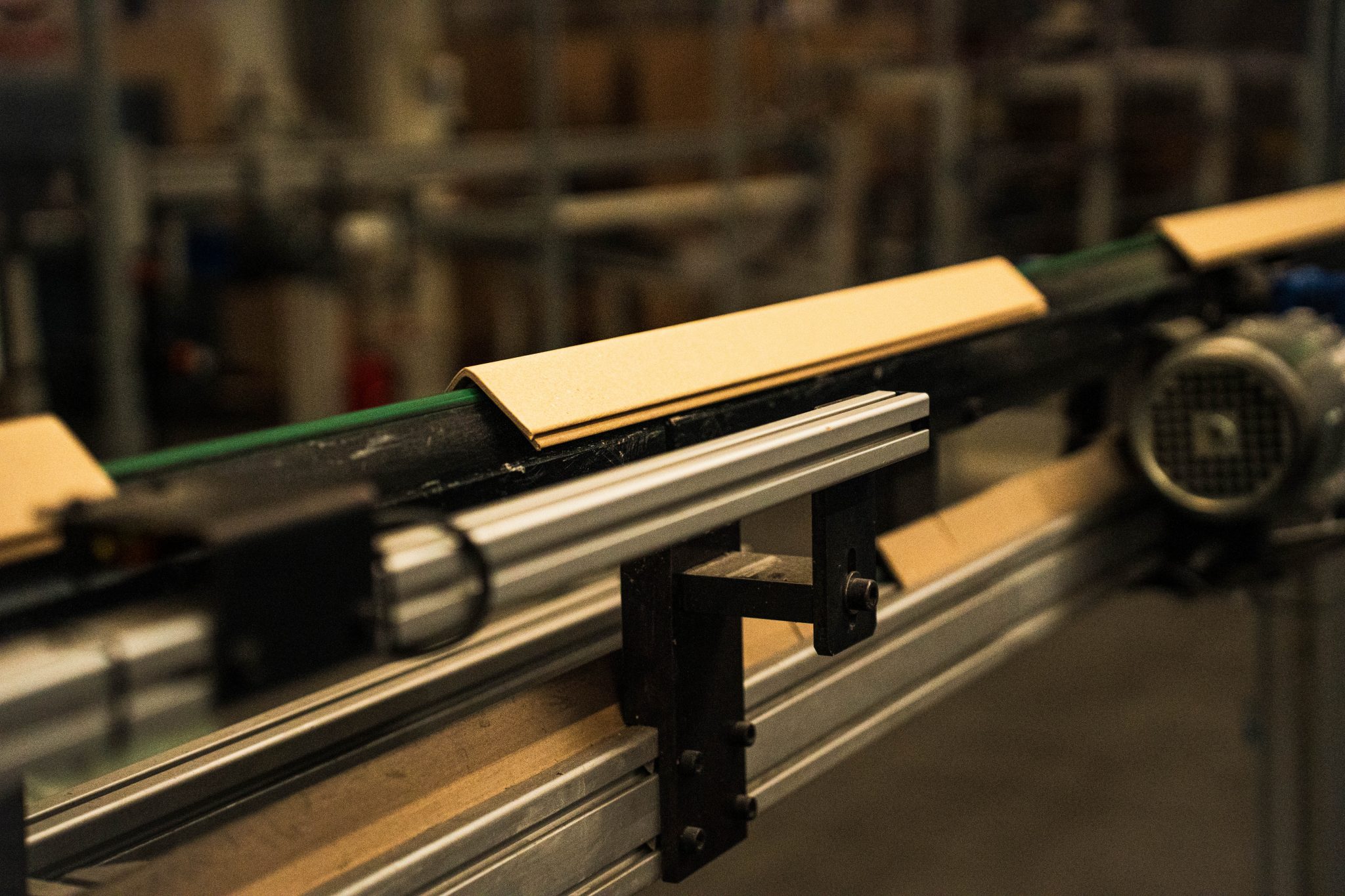
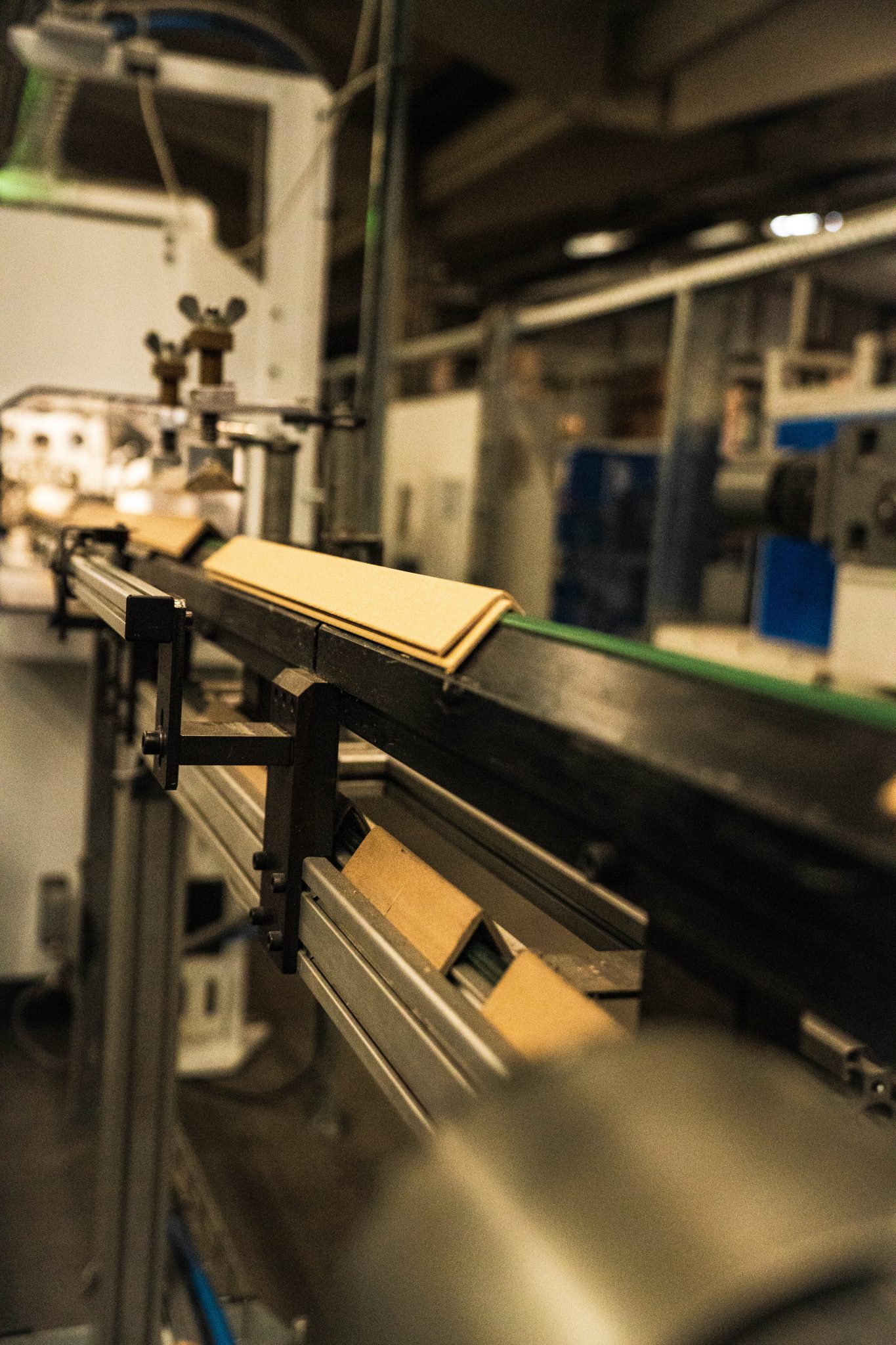
What makes UPA Pack’s U/L profiles unique is their innovative L-shaped delivery format. The profiles are delivered in a space-saving L-shaped configuration, with one side of the L standing vertically and maintaining its shape. The other side can be easily folded up for use thanks to a pre-cut groove, creating the U-profile.6 This design offers significant advantages in the storage and handling of the protective profiles themselves, as it reduces the volume during delivery and storage. The foldability also makes it easier to attach the profiles to the packaged goods, especially in the case of complex shapes or hard-to-reach edges, and allows for flexible on-site adjustment.6
The customization options for U/L profiles are the same as those for flat profiles: various cover sheets (brown, colored), a self-adhesive option (inside/outside, single- or double-sided), and a water-repellent PE coating are available.6 Custom printing is also possible, which can turn the profiles into an information carrier or marketing tool.
The choice of material—100% recycled paper—is not only an environmental statement but also offers tangible economic benefits. Paper is a well-established recyclable material in the recycling cycle, which simplifies disposal for the end customer and can reduce costs.12 Companies that rely on such sustainable materials enhance their environmental profile and meet the growing demands of regulators and consumers.
| Profile type | Material | Key Features | Main Applications | Customization options |
| Flat profile | 100% recycled paper | Slim, versatile | Cut-resistant liners, spacers, surface protection, manufacturing of disposable load carriers | Brown/colored cover sheet, water-repellent PE coating, single- or double-sided adhesive backing, custom printing 6 |
| U/L-profile | 100% recycled paper | L-shaped, folds into a U-shape, dimensionally stable | Edge and corner protection, protection against strapping, stabilization | Brown/colored cover sheet, self-adhesive on one or both sides (inside/outside), water-repellent PE coating, custom printing 6 |
Table 1: UPA Pack Protective Profiles – Features and Options at a Glance
The well-thought-out design—as evidenced by the L-shaped configuration of the U/L profiles—shows that UPA Pack looks beyond mere material considerations and also focuses on logistical benefits for the customer. Reduced storage space and more efficient transport of the protective materials themselves are often overlooked but important cost factors that are addressed here.
Application Area 1: Flat Profiles – Universal Protection for Sensitive Surfaces and More
UPA Pack's flat profiles prove to be extremely versatile tools in industry when it comes to protecting delicate surfaces or structuring packaging units. Made from 100% recycled paper, they are an eco-friendly choice for a wide range of applications.6
In the manufacture of single-use load carriers and as part of packaging systems:
Flat profiles are not merely simple dividers; they can also serve structural purposes. They are used to reinforce larger cardboard boxes or as stabilizing components within custom-designed packaging systems.6 For example, they can serve as the basis for product nests that securely hold individual components in place, or be used to create compartments within a larger packaging unit. The fact that they are used in “system packaging” points to their high adaptability and the ability to integrate them into complex, multi-part packaging solutions, which speaks to the manufacturer’s engineering expertise.
As cut-resistant inserts and spacers
One of the main uses of flat profiles is to protect sheet materials. Whether made of wood, plastic, metal, or glass, these sheets are susceptible to scratches, abrasion, and dents during stacking and transport. Flat profiles, placed between the individual sheets, prevent direct contact and thus minimize the risk of damage.6 Especially with metal sheets, they can also help reduce contact corrosion, as paper has certain moisture-regulating properties. The use of solid cardboard interlayers to protect metal components in mesh boxes is a practical example of this application.14 While some specialty papers are treated with PFC/PFAS to achieve water- and grease-repellent properties 15, the basic version of UPA Pack flat profiles made from untreated recycled paper represents a more environmentally friendly basic solution. A PE coating is available as an option for increased moisture protection.6
For stabilizing and separating layers on pallets:
When palletizing goods, flat profiles used as interlayers prevent individual product layers from shifting and help ensure a more even weight distribution.14 This increases the stability of the entire pallet and reduces the risk of transport damage caused by internal movement of the load. At the same time, they protect the lower layers from contamination by the pallet or products above.
Flat profiles made from recycled paper thus offer a cost-effective and environmentally friendly alternative to plastic or foam interlayers, especially when extreme barrier properties against moisture or grease are not absolutely necessary. However, the optional PE coating also extends their range of applications to include moisture-sensitive uses.6 The possibility of additional specific surface treatments, such as antistatic or slip-resistant coatings, could even further expand the range of applications in the future, for example in the electronics industry—a potential that underscores the material’s flexibility and the manufacturer’s commitment to innovation.
Application Area 2: U/L Profiles – The Specialist in Rugged Edge and Corner Protection
UPA Pack’s U/L profiles are specifically designed to reliably protect the edges and corners of products from the various stresses encountered during transport, handling, and storage. Made from sturdy cardboard, they offer an effective and sustainable solution for a wide range of industrial applications.6
General protection and stabilization:
One of the key functions of U/L profiles is to protect against damage caused by strapping bands. Without proper protection, these bands can cut into the edges of the packaged goods, damaging both the product and the primary packaging.11 U/L profiles distribute the pressure of the strapping evenly, thereby effectively preventing such damage. In addition, they absorb shocks and protect the often-sensitive edges and corners from mechanical stress.18
In addition to providing direct product protection, U/L profiles play a key role in stabilizing palletized goods and individual cartons.19 They improve stackability by better absorbing and distributing vertical loads, which is particularly advantageous during the storage and transport of stacked units.21
Industry-specific solutions
The foldability of UPA Pack's U/L profiles proves to be particularly advantageous in this context.6 It allows for flexible adaptation to products with varying edge thicknesses or hard-to-reach areas directly at the packaging station. This can speed up the packaging process and reduce the need to stock a wide variety of different, rigid profile sizes.
The combination of durability—achieved through the use of high-quality solid board or hard paper—and the sustainability of recycled paper makes U/L profiles a future-proof solution. They meet both economic requirements—by reducing damage and increasing efficiency—and ecological standards—through material selection and recyclability. Furthermore, the targeted use of edge and corner protection profiles can help reduce the total amount of packaging material. Instead of completely wrapping a product in thick cushioning materials, the profiles provide precise protection exactly where it is most needed. This aligns with the trend toward less oversized packaging and leads to lower material costs and less waste.26
| Industry | Common challenge/problem | UPA Pack U/L Profile Solution (Example) | Specific benefits |
| Furniture industry | Chipped edges, scratches on surfaces, damaged corners | Self-adhesive U/L-profile, cut to exact specifications | Fewer complaints, protection for delicate finishes, easier handling |
| Glass industry | Risk of breakage at glass edges, chipping, and scratches on surfaces | U/L-profile with PE coating for moisture protection | Safe transport of flat glass, mirrors, and windows; fewer breakages |
| Metal industry | Scratches on painted/sensitive surfaces, dents, bending | Sturdy U/L-profile for edge protection or as a divider | Protection against damage during stacking and transport of sheet metal and structural sections |
| Construction industry | Damage to doors, windows, and panels at the construction site | Long U/L-shaped profile for protecting edges during transport and installation | Less waste and rework, protection from construction site conditions |
| Logistics | Unstable pallet loads, cutting into strapping bands | Standard U/L profiles for pallet stabilization and as protection against strapping | Improved transport safety, better stackability, protection of the primary packaging |
Table 2: UPA Pack U/L Profiles in Industrial Applications – Problems and Solutions
This table illustrates how UPA Pack, with its U/L profiles, addresses the specific needs of various industries and offers concrete solutions to everyday challenges in the transportation and logistics sector.
The advantages on your side: Why UPA Pack profiles are a winning choice
The use of protective profiles from UPA Pack offers companies a range of significant benefits that go beyond mere product protection and encompass aspects such as sustainability, customization, cost-effectiveness, and service quality.
Sustainability as a core competency:
A key feature of UPA Pack profiles is that they are made from 100% recycled paper.6 This positions them as an eco-friendly alternative to protective packaging made from virgin fibers or petroleum-based plastics. Easy disposal in the established waste paper recycling system 6 not only makes handling easier for end customers but also supports the circular economy and helps companies achieve their sustainability goals. At a time when reducing plastic waste and the responsible use of resources are becoming increasingly important 26, these profiles offer a practical solution.
Maximum customization to meet specific requirements:
UPA Pack understands that standard solutions are often insufficient. That is why our flat and U/L profiles are custom-made to meet customer specifications regarding length, flange width, and material thickness.6
In addition, a wide range of options enhances functionality and adaptability: A PE coating provides improved moisture protection, making it ideal for use in cold storage facilities or during transport under varying climatic conditions.6 A self-adhesive feature significantly simplifies the application of the profiles, saves time during the packaging process, and ensures a secure hold.6 Colored cover sheets or custom printing with company logos, warning labels, or item numbers not only allow for alignment with corporate design but can also facilitate handling and identification in the warehouse.6 This high level of flexibility ensures that the optimal protective solution can be configured for virtually any application.
Increased efficiency and cost savings
The primary purpose of protective profiles—to reduce shipping damage—leads directly to significant cost savings.1 Fewer damaged products mean fewer complaints, lower costs for replacement shipments or repairs, and help avoid the often difficult-to-quantify loss of reputation. Furthermore, custom-fit and easy-to-handle protective profiles, such as the self-adhesive variants or the cleverly designed U/L profiles in L-shaped delivery form, can increase the efficiency of packaging processes. This results in faster processes and less material waste. By providing targeted protection for edges and surfaces, the amount of other, often more expensive and less sustainable packaging materials can also be reduced in many cases.
Quality and service “Made in Germany”
UPA Pack is recognized as the European market leader in edge protection, which is a testament to the high quality and reliability of its products.5 Production in Germany not only ensures consistently high quality but also enables fast delivery times and a high degree of flexibility in meeting customer-specific requirements.5 Another key aspect is expert consultation. UPA Pack’s experienced team assists customers in selecting the optimal protection solution for their specific products and processes.5 In the B2B sector, this service is often a decisive factor for a successful and long-term partnership, especially when it comes to custom-made products.
The combination of environmental responsibility through sustainable materials and production methods, along with the ability to offer deep customization, positions UPA Pack as a modern and forward-thinking partner. Companies receive not just a product, but a well-thought-out solution that supports their overall goals in terms of cost efficiency, sustainability, and customer satisfaction. The reliable delivery of undamaged goods is a fundamental building block for a positive customer experience and long-term customer loyalty. By helping to minimize transport damage, UPA Pack makes a direct contribution to its customers’ business growth.
Conclusion: Choose UPA Pack for customized and sustainable protection
UPA Pack’s protective profiles—whether the versatile flat profiles or the robust U/L profiles—offer far more than just basic edge protection. They represent a smart, customizable, and, above all, sustainable solution for effectively protecting a wide variety of products across diverse industries from damage during transport. Made from 100% recycled paper, they underscore our commitment to environmental protection and resource conservation, while the wide range of customization options—from dimensions and coatings to printing—ensures that every packaging challenge can be optimally met.6
The benefits for businesses are clear: a significant reduction in costly shipping damage, increased efficiency in packaging processes, and, last but not least, a positive contribution to their sustainability record. The clever design—such as the space-saving L-shaped configuration of the U/L profiles—demonstrates a deep understanding of customers’ logistical needs.6
Today more than ever, choosing a packaging solution is a strategic decision. It affects not only costs and efficiency, but also brand image and the achievement of sustainability goals. UPA Pack positions itself not merely as a supplier of high-quality protective profiles, but as a trusted partner that helps industrial companies optimize their packaging strategies and deliver their products safely, sustainably, and cost-effectively to their destination.
If you, too, want to reliably protect your products while optimizing your packaging processes, UPA Pack’s protective profiles are an excellent choice. Learn more about the wide range of options available at https://upa-pack.de/produkte/profile/, or contact us directly for personalized advice tailored to your specific needs.
References
- Shipping Damage: Who Is Liable, When, and for What? – enviropack.de, accessed May 7, 2025, https://www.enviropack.de/magazin/transportschaden/
- Shipping Damage: Risks and Liability in Shipping – TransPak AG, accessed May 7, 2025, https://www.transpak.at/transportschaeden
- CO2 Reduction: Climate Protection as a Threat to Logistics – Produktion.de, accessed May 7, 2025, https://www.produktion.de/technik/co2-neutrale-industrie/co2-reduktion-klimaschutz-als-gefahr-fuer-die-logistik-219.html
- E-commerce Fulfillment: Challenges and Solutions – Mecalux.de, accessed May 7, 2025, https://www.mecalux.de/blog/ecommerce-fulfillment
- UPA PACK: Customized shipping protection from the manufacturer, accessed on May 7, 2025, https://upa-pack.de
- Cardboard edge protectors for edges and corners | UPA PACK, accessed May 7, 2025, https://upa-pack.de/produkte/profile/
- Home – The New Packaging Act (VerpackG) 2025, accessed May 7, 2025, https://www.verpackungsgesetz.com/
- EU Packaging Regulation: What the PPWR Means for Transport Packaging – Pacoon, accessed May 7, 2025, https://www.pacoon.de/nachhaltigkeit/blog/d/eu-verpackungsverordnung-was-ppwr-fuer-die-transportverpackungen-bedeutet/
- Reduce shipping damage with packaging from UPA PACK, accessed May 7, 2025, https://upa-pack.de/produkte/
- Solid cardboard corner protectors – custom – UPA PACK, accessed May 7, 2025, https://upa-pack.de/produkte/kantenschutzwinkel/
- Solid Board U-Profiles & L-Profiles | Papier Sprick, accessed May 7, 2025, https://papier-sprick.de/produkt/vollpappe-u-l-profile/
- Shipping Packaging in the Packaging Act » What You Need to Know – Händlerbund, accessed May 7, 2025, https://www.haendlerbund.de/de/ratgeber/recht/4218-transportverpackung-verpackungsg
- Sustainable Packaging – An Investment in the Future – Combra Packaging Systems, accessed May 7, 2025, https://www.combra.de/nachhaltige-verpackung-eine-investition-in-die-zukunft/
- Materials for industrial use / Packaging – KOHLSCHEIN.de, accessed May 7, 2025, https://www.kohlschein.de/de/inspiration/verpackungen/industrieverpackungen/
- Use of PFCs in the paper industry – Federal Environment Agency, accessed May 7, 2025, https://www.umweltbundesamt.de/einsatz-von-pfc-in-der-papierindustrie
- Use of PFAS in the paper industry – Federal Environment Agency, accessed May 7, 2025, https://www.umweltbundesamt.de/einsatz-von-pfas-in-der-papierindustrie
- References – HILDE24.de, accessed May 7, 2025, https://www.hilde24.de/Papier-und-Pappe/Zwischenlagen/2070/
- What is the purpose of edge protection? – Airlineschienen-Shop, accessed May 7, 2025, https://www.airlineschienen-shop.de/blogs/news/kantenschutz
- Corner protectors to prevent damage to cargo, accessed on May 7, 2025, https://www.nordpack.de/kantenschutzwinkel/
- Edge protection profiles as the ideal protective cover – RAJA – Rajapack DE, accessed May 7, 2025, https://www.rajapack.de/polster-fuellmaterialien/kantenschutzprofile-ecken/kantenschutz_C257010.html
- Edge protectors – Hoffmann Packaging, accessed May 7, 2025, https://www.hoffmann-verpackung.de/polster-fuellmaterial/kantenschuetzer/
- Furniture Industry – Sectors | nextPACK AG, accessed May 7, 2025, https://www.nextpack.de/branchen/moebelindustrie/
- Edge protection: Wide selection of angle profiles – RAJA, accessed May 7, 2025, https://www.rajapack.de/polster-fuellmaterialien/kantenschutzprofile-ecken_C2570.html
- U-shaped profile made of corrugated cardboard, 120 mm internal dimension / 60 mm flange width / 20 mm thick, accessed on May 7, 2025, https://verpackungskoenig.de/U-Profil-aus-Wellpappe-120-mm-Innenmass-60-mm-Schenkel-20-mm-Stark
- Self-adhesive cardboard door frame edge protectors, suitable for universal use, accessed on May 7, 2025, https://www.rohrisolierung-direkt.de/abdeckmaterial/tuerzargenschutz-kantenschutz/tuerrahmen-kantenschutzprofile-selbstklebend-aus-pappe-universell-einsetzbar-3368
- Packaging Trends – Packaging of the Future | Karl Knauer, accessed May 7, 2025, https://www.karlknauer.de/de/innovation-und-trends/verpackungen/packaging-trends
- Sustainable Packaging – Fraunhofer IVV, accessed May 7, 2025, https://www.ivv.fraunhofer.de/de/verpackung/nachhaltige-verpackung.html