

The Versatility of Cardboard Tubes
– More Than Just a Core
Cardboard tubes, often viewed as simple cardboard cylinders, are in fact highly sophisticated components that play a key role in an impressive range of industrial processes. Their versatility, adaptability, and—increasingly—their sustainability make them an indispensable element in numerous industries.
What are cardboard tubes? A basic definition.
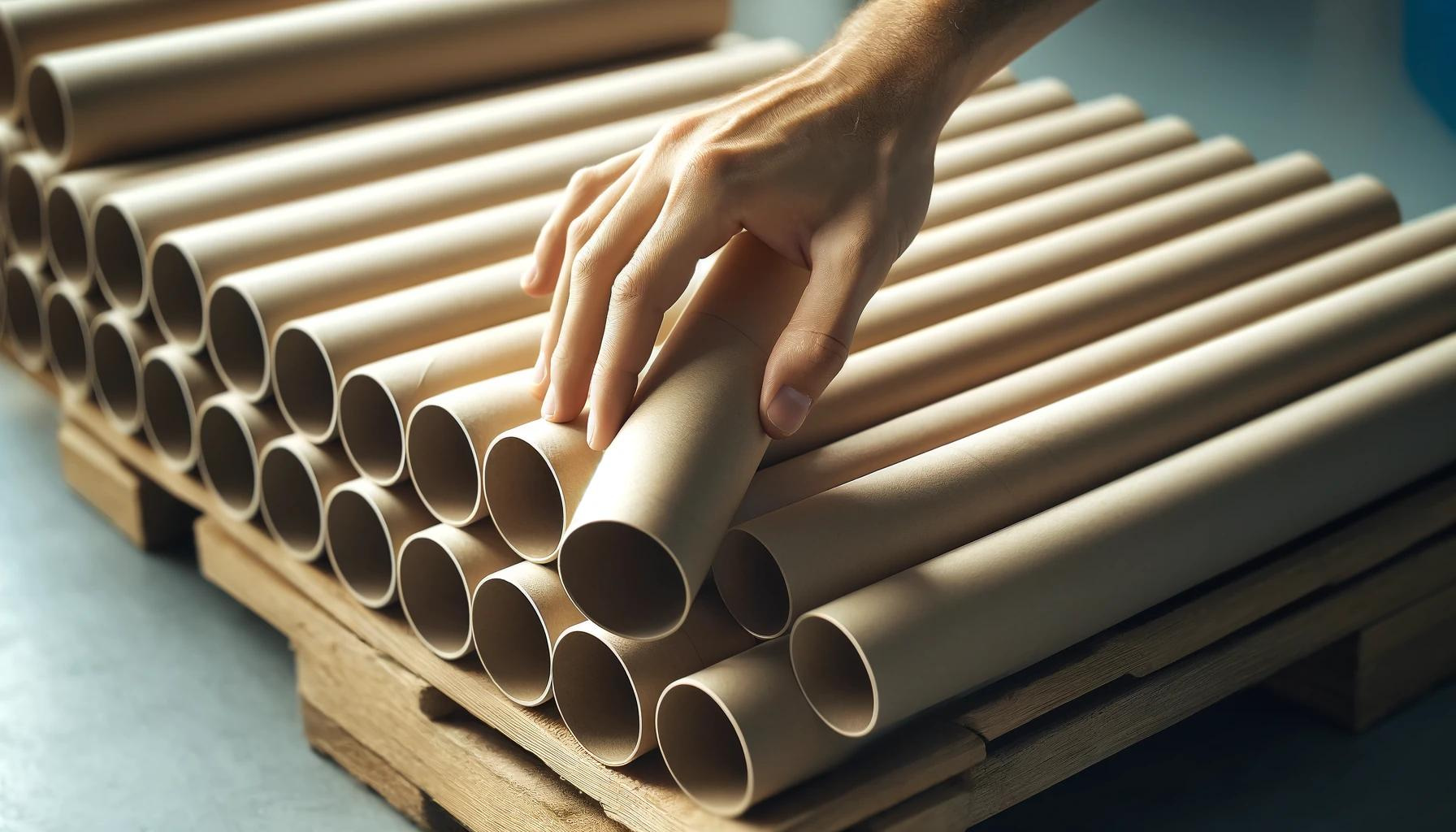
Cardboard tubes are essentially cylindrical—or, less commonly, conical—hollow structures whose walls consist of several layers of paper or cardboard. These paper webs are glued together and often compressed under pressure to create a dimensionally stable and robust structure.1 Depending on their specific function in the application process, they are referred to by different names: If they are used for winding flat materials such as paper and films or thread-like materials such as yarns, they are called winding cores. If, on the other hand, they are used for filling, as protective packaging, or as spacers, they are called tubes.3
A look at its surprising versatility and industrial significance.
The industrial significance of cardboard tubes is immense and spans an astonishing variety of sectors. From traditional strongholds such as the paper, printing, and textile industries to modern high-tech applications in the film, electronics, and construction industries—cardboard tubes are ubiquitous.3 Their often underestimated importance stems from their ability to be designed as tailor-made solutions for highly specific requirements.7 Many production processes would be unthinkable without the reliable function of these components, or at least significantly less efficient. Their development has evolved from a simple carrier medium to an integral component that can significantly influence the efficiency of the overall process and the quality of the end product. This becomes clear when one considers the “intensive development work” and the “consistent focus on technical requirements” that manufacturers invest in optimizing their cores.7
Custom-made products such as measuring head sleeves for the steel industry—which are based on “special raw material formulations and specific adhesives” to ensure extreme heat resistance—demonstrate just how far these products have come from a simple cardboard tube.10 The reliability of these often “invisible necessities” is critical; a failure or poor quality of the sleeve can lead to significant production disruptions, material loss, and machine downtime.9
Key benefits at a glance: stability, adaptability, and sustainability.
Three key characteristics underpin the success and widespread acceptance of cardboard tubes: their durability, their exceptional adaptability, and their positive sustainability benefits.
Cardboard Tubes – An Overview of Their Features and Benefits
The following table summarizes the key characteristics of hard paper tubes and the resulting benefits for various applications:
| Property | Advantage for the application | Examples of sources |
| High stability (radial pressure, deflection) | Reliable winding of heavy/wide materials, protection of delicate goods | 2 |
| Precise dimensions (length, diameter, wall thickness) | Consistent material feed, trouble-free operation in machines, custom-fit solutions | 3 |
| Good concentricity | Optimal winding quality, prevention of vibrations at high speeds | 3 |
| Customizable surface finish | Suitable for delicate materials, improved adhesion, printability, special features (e.g., water-repellent) | 3 |
| Lightweight (compared to metal) | Easier handling, lower shipping costs | (Implicitly) |
| No static charge (see plastic) | Safe for use in electronics and hazardous areas; better for textiles | 3 |
| Physiologically and chemically safe | Used for food packaging, medical applications, and photo paper | 3 |
| Recyclability & Biodegradability | Environmentally friendly, contributes to the circular economy, reduces plastic waste | 1 |
| Cost-effectiveness | More affordable than alternatives such as plastic sleeves for many applications | 3 |
The backbone of the industry: cardboard tubes as winding cores
The role of a winding core is one of the earliest and, to this day, most important applications of hard paper tubes. They form the stable core onto which web-like or thread-like materials are wound, thereby facilitating their handling, transport, and further processing.
In the paper and printing industry: From newsprint rolls to specialty papers.
Cardboard tubes are indispensable in paper manufacturing and processing, as well as in the printing industry. They serve as winding cores for a wide range of paper products, including graphic papers for printing, packaging papers, corrugated base papers, hygiene papers (often in the form of parent rolls weighing several tons), high-quality photo and inkjet papers, as well as various technical papers such as electrical insulation papers, filter papers, abrasive base papers, and decorative papers.3 They are also used for specialty papers such as parchment, cigarette, or thermal label paper.5
The requirements in this sector are high: The cores must bear enormous weights (load capacity 3), exhibit excellent concentricity for high machine speeds, and have precise dimensions to withstand the stresses of modern printing presses and paper mills.7 For example, core grades such as “M-CORE HT” are specifically designed for high winding speeds and roll widths.5
Certain types of paper require specific core properties. PZ cores, for example, have a particularly soft and pliable surface that prevents marks from forming at the start of the roll on sensitive photo and inkjet papers, thereby allowing them to be used right down to the last meter.9 Special D-series cores have been developed for decorative papers that tolerate only minimal moisture exchange within the packaging.7
In the film and flexible packaging industry: strength meets precision.
Auch die Folienindustrie und Hersteller flexibler Verpackungen setzen in großem Umfang auf Hartpapierhülsen. Sie dienen zum Aufwickeln von Kunststofffolien verschiedenster Art (z.B. aus Polyethylen (PE), Polypropylen (PP) oder Polyester), dünnen Metallfolien (wie Kupferfolien), Agrarstretchfolien für die Landwirtschaft und einer Vielzahl technischer Folien.3
Eine besondere Herausforderung in diesem Bereich sind die hohen Radialkräfte, die beim straffen Aufwickeln von Folien auf den Kern wirken. Hierfür wurden spezielle Hülsenkonstruktionen, wie die K-Hülsen, entwickelt, die diesen Wickeldruck besonders gut aufnehmen und den Belastungen länger standhalten.11
Für extrem dünne Folien, beispielsweise mit Dicken unter 10 Mikrometer (<10 µm), sind Hülsen mit einer außergewöhnlich glatten Oberfläche erforderlich.
Thermo-Transfer-Hülsen oder NP-Hülsen weisen hier Oberflächenwelligkeiten von unter 20 Mikrometer (<20 µm) und rauheitswerte von unter 1,5 mikrometer (<1,5 auf, um beschädigungen oder abdrücke auf den empfindlichen materialien zu vermeiden.10 spezielle oberflächenbeschichtungen aus pe, zellglas silikon ermöglichen zudem ein rückstandsfreies abwickeln der folien.14
Innovationen zielen auch auf die Prozessoptimierung ab: Sogenannte FS-Hülsen mit vollflächigem oder spiralförmigem Haftkleber oder AR-Hülsen mit einer stumpfen Oberfläche ermöglichen einen automatischen Rollenwechsel in den Produktionsanlagen, ohne dass konventionelle Klebebänder eingesetzt werden müssen.14
In the textile industry: From fine yarns to durable carpets.
In the textile industry, hard paper tubes have long been established and serve as winding cores for a wide range of products—from fine yarns and twisted yarns to fabric rolls and nonwovens, all the way to heavy carpets, whether for residential use (wall-to-wall) or specialized applications such as in the aerospace industry.3 They are also the preferred choice for technical textiles used, for example, in roofing or agriculture.7
For many of these applications, particularly where high stability is required, parallel-wound cores are used, as they offer higher tensile strength along the longitudinal axis and thus exceptionally high bending stiffness.3
Compared to plastic alternatives, paper tubes offer significant advantages in the textile industry: They are generally more cost-effective, do not cause problems due to static electricity (which can be critical when processing yarns), are universally applicable, their surface can be easily adapted to the specific requirements of the material being wound, and they have a lower environmental impact.3
To give the textile sleeve the optimal surface finish for the specific yarn or fabric, it can be further processed using methods such as rolling or grinding.3
In the metal industry: Reliable cores for metal strips and foils.
Although they are less commonly discussed, cardboard tubes are also used in the metalworking industry, where they are used to wind thin metal strips or foils.7 The requirements here are similar in many respects to those of the film industry: cores with high strength and precise dimensions are required. Depending on the sensitivity of the metal, special surface finishes may also be necessary here to prevent scratches or other damage and to ensure flawless winding and unwinding, similar to the cores used for thin films.11
The ongoing development of ever-faster and wider production lines, whether in printing plants or at film manufacturers, places increasingly higher demands on the performance of the core reels used.18 Today, cores must exhibit “exceptionally high strength” and “good concentricity” in order to withstand modern high-speed processes.7 The development of K-shafts that “withstand the highest loads during the winding process of plastic films” is a direct response to the enormous forces generated in modern film production lines.11 This co-evolution of machines and cores is a key driver of innovation in core technology.
In addition, surface technology has become a key factor in minimizing material wear and optimizing processes. Specialized surfaces, such as extremely smooth finishes for thin films 10, and soft surfaces for photo paper 9 or adhesive or repellent surfaces for automated roll change 14are not just nice-to-have features.
Protection and Shipping: Cardboard Tubes in Packaging and Logistics
In addition to their function as winding cores, hard paper tubes have also established themselves as versatile and reliable components in the packaging and logistics sectors. They provide protection for a wide range of products and streamline shipping and warehousing processes.
Shipping tubes: Safe transport for rolled and elongated items.
Probably the best-known packaging application is the shipping tube. It is the ideal solution for the safe transport of rolled or elongated items. These include posters, blueprints, maps, technical drawings, and other documents, as well as products such as umbrellas, thin tubes, curtain rods, and blinds.3
Shipping tubes can be manufactured in a wide range of lengths, diameters, and wall thicknesses to optimally accommodate the specific dimensions and weight of the shipped goods.3 Plastic caps, which are available in various standard diameters, are typically used for sealing.13
However, innovative crimp closures—which are formed directly from the can wall—are also becoming increasingly common. This eco-friendly solution reduces the need for plastic components and, consequently, plastic waste.16 In addition to the classic round shapes, rectangular or triangular tubes are now also available on the market; these are equipped, for example, with a push-on closure, making it easier to package non-cylindrical but still elongated items.20
Protective packaging: More than just a cover.
Cardboard tubes and related cardboard products also play an important role in protecting goods during transport and storage.
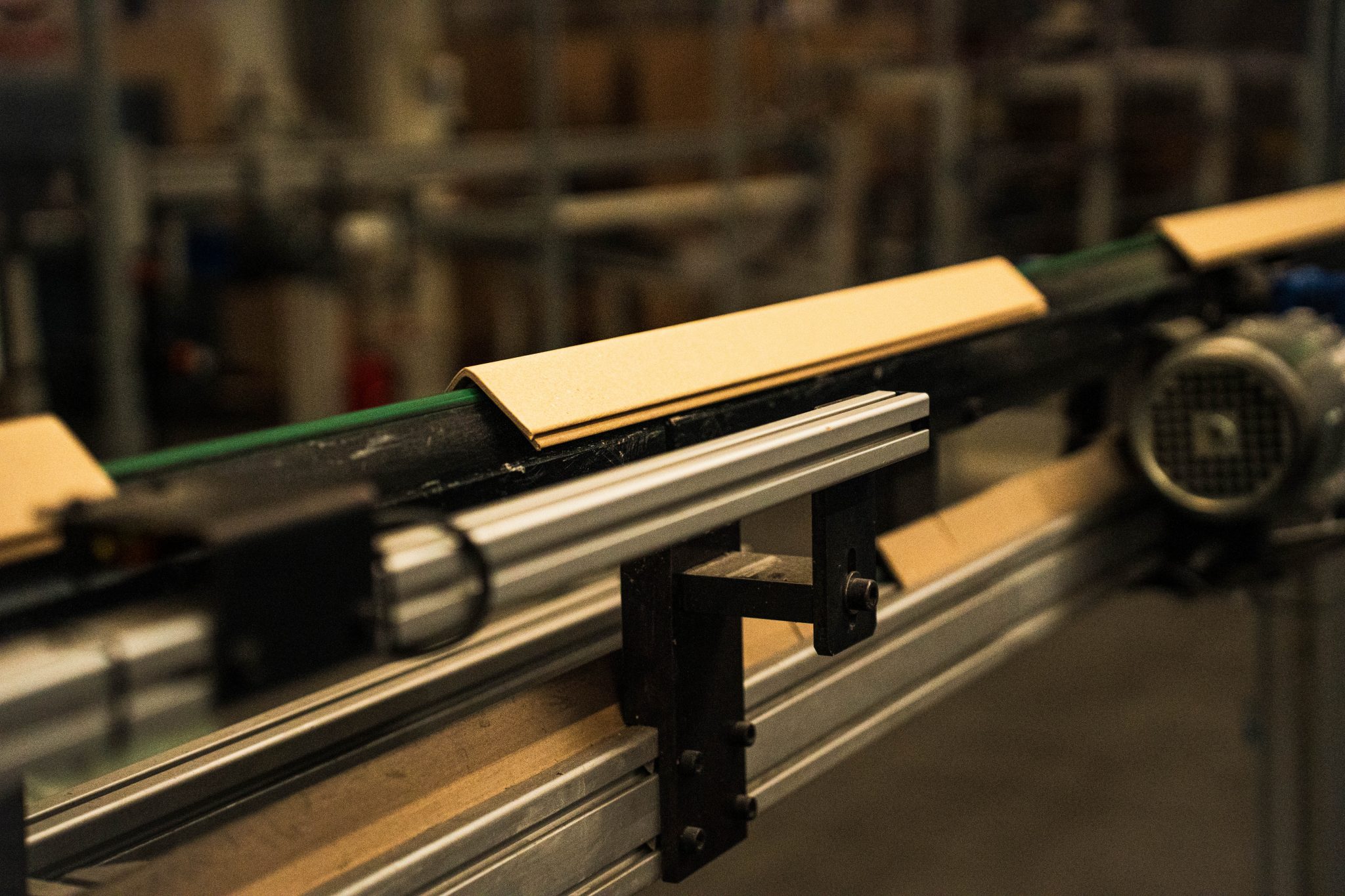
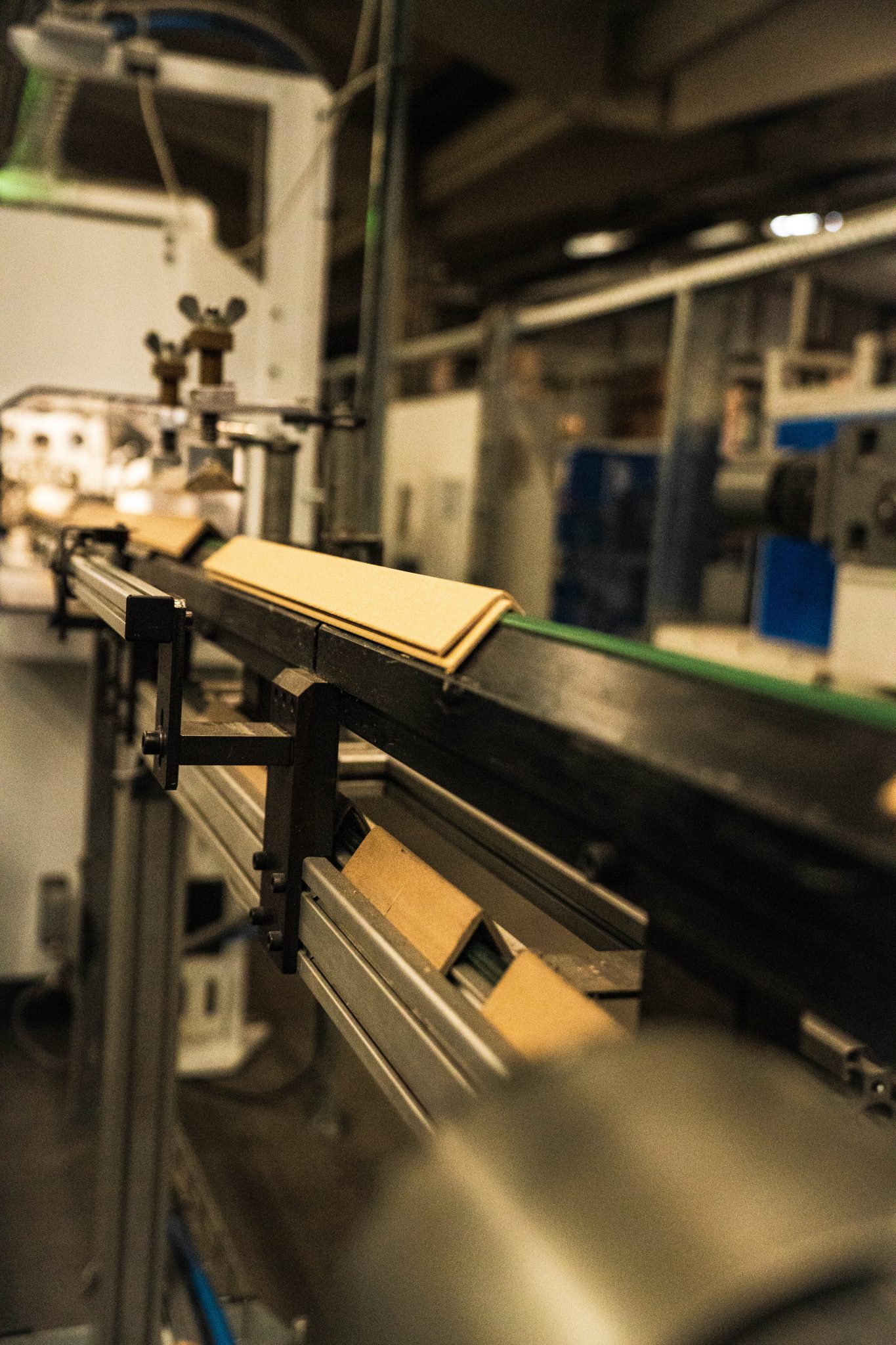
Although not strictly a tube, cardboard edge protectors are a closely related product often offered by the same manufacturers and based on similar material properties and manufacturing techniques.
It is designed to protect the delicate edges of palletized goods or large packaging units.4
Support sleeves, usually wound in parallel for maximum stability, are used for the internal reinforcement of cardboard boxes and other packaging. They significantly increase stackability and ensure better product protection by preventing the packaging from collapsing under load.10 These tubes are characterized by excellent compression resistance.10
Half-shells have been developed for shipping particularly bulky or heavy goods such as roll-up doors, metal dies, or large filters and screens for the paper industry. These robust, half-shell tubes made of heavy-duty paperboard offer optimal protection and, due to their stability, are even suitable for overseas shipping.10
Product Packaging: Functionality Meets Design.
Beyond their traditional roles in protection and transport, cardboard tubes are also making inroads into the field of direct product packaging, particularly for cylindrical or elongated items that are displayed directly at the point of sale.20 Here, aesthetics play an important role alongside functionality. Hard paper tubes can be beautifully decorated, whether through direct printing or by laminating them with custom-designed, colored, or printed papers.3 This results in attractive decorative and ornamental tubes that enhance the product.
Thin-walled combination cans are a special type. These often consist of a paper tube as the body and permanently attached bottoms and lids made of materials such as paper, plastic, or sheet metal. They are used as packaging for food (e.g., salt, spices, snacks), detergents, or other powdered and granular products.2
The steady growth of online retail has significantly increased the demand for sturdy, lightweight, and adjustable shipping solutions. With their properties—good protection, customizable length and diameter, and low weight—cardboard tubes are perfectly suited to the demands of e-commerce, where products often pass through many stages in the logistics chain and must arrive safely at the end customer.21
At the same time, sustainability is becoming an increasingly important factor in packaging and is becoming a key purchasing decision for many consumers. According to a survey, nearly 70% of respondents have at least once decided not to buy a product because they felt its packaging was not sustainable enough.21 This is where hard paper tubes can showcase their strengths: their recyclability, biodegradability, and the development of plastic-free closure solutions such as the 16-fold closure meet the demand for more environmentally friendly packaging alternatives.1 Companies that rely on hard paper tubes can actively leverage this in their sustainability communications.
A Foundation for Innovation: Cardboard Tubes in the Construction Industry
In the construction industry, too, cardboard tubes have established themselves as practical and cost-effective tools for specific tasks. Their durability and malleability enable innovative construction solutions.
Formwork pipes for concrete: Creating round shapes made easy.
One of the most prominent applications of rigid paper tubes in the construction sector is their use as formwork tubes for the production of concrete piers, columns, or other round concrete elements.4 Products such as “Sonotube” are a well-known example of this.5
These cardboard tubes offer sufficient dimensional stability and strength to withstand the pressure of fresh concrete and create the desired shape for load-bearing elements.4 Compared to traditional steel or wood formwork, they are often more cost-effective and easier to handle, as they are lighter and do not require extensive cleaning after use.22 Special interior coatings or inserted films can prevent the concrete from adhering to the inside of the sleeve 6 and ensure a smooth surface for high-quality exposed concrete.22
Once the concrete has cured, the cardboard formwork tubes can be easily removed, for example by tearing them open using an integrated tear cord.22 In addition to round cross-sections, formwork tubes for square and rectangular columns are also available.5
Temporary piping and formwork.
In addition, cardboard tubes can be used in the construction industry as temporary conduits for utility lines, such as water or electrical cables, during the construction phase.4 They provide simple and cost-effective protection for these lines before the final installations are completed.
Another application, though one that is rarely mentioned explicitly, is the use of these sleeves as void formers in concrete structures. By embedding sleeves in concrete, voids can be created in specific locations—for example, to reduce the overall weight of a structure or to provide future access channels for installations.
Cores for building materials: Invisible helpers in interior construction.
In the field of interior finishing, hard paper tubes are returning to their traditional role as core rolls. They serve as sturdy supports for rolled building materials such as carpet, vinyl flooring, wallpaper, and other wall and floor coverings.1 Here, they ensure that the materials can be stored and transported without kinking and remain protected.
The acceptance of cardboard tubes in the construction industry, particularly as formwork tubes, is largely driven by their cost-effectiveness. The combination of sufficient stability for the intended purpose 4, ease of handling due to their lower weight, and straightforward removal 22 , as well as material and labor costs that are often lower compared to reusable steel or wood formwork, makes them an attractive choice for specific applications such as casting columns.5
The “disposable” nature of these formwork tubes often proves to be a logistical advantage on construction sites. There is no need for the time-consuming cleaning, storage, and return transport of heavy reusable formwork. Instead, the used cardboard tubes can be disposed of relatively easily, and their recyclability and biodegradability 1 can minimize the environmental impact compared to some single-use plastic solutions or the energy required to process steel formwork.
Specialists at Work: Innovative and Niche Applications
Beyond their established mainstream applications, hard paper tubes demonstrate their remarkable versatility in a wide range of specialty and niche markets. Here, precisely tailored material properties and innovative designs enable their use in often unexpected areas.
Advertising and Event Industry: A Platform for Messages and Structures.
In the dynamic advertising and events industry, cardboard tubes serve as a lightweight and versatile construction material. They form the basis for large-format advertising banners and posters, or are assembled into components for trade show booths and other temporary structures.4
Their advantages lie in their ease of handling and flexibility, which allow for quick and uncomplicated setup and takedown.4 In addition, the surfaces of the cardboard tubes are easy to print on, making them an ideal platform for presenting advertising messages.4
Technical and highly specialized applications: Precision made from paper.
True innovative strength is evident in the technical and highly specialized applications in which hard paper tubes often perform critical functions:
Many of these specialty sleeves are the result of close collaboration between manufacturers and users. Statements such as “Together with you, we develop the right sleeve for your product” 7 or the development of solutions that are “tailored to the customer’s needs” 8, underscore this co-creative approach. This dialogue makes it possible to solve complex problems and create highly customized products that go far beyond standard solutions.
The ability to achieve this through the careful selection of raw materials (“select raw materials,” “special raw material formulations” 10), and advanced adhesive technology (“special adhesives” 10), and precise surface treatments (“extremely smooth surface structure” 10) and controlled production processes (“precise drying” 10) to achieve specific properties such as heat resistance, extreme smoothness, or hygienic safety is the key to success in these niche markets. It is this expertise in materials science that makes it possible to continually push the boundaries of paper as a material and tap into areas of application that one would not traditionally associate with “cardboard.”
The sustainable choice: Environmental benefits of cardboard tubes
In a world that is placing increasing emphasis on environmental responsibility and resource conservation, paperboard tubes are emerging as a sustainable material choice for a wide range of applications. Their environmental benefits stem from their recyclability, biodegradability, and the use of renewable raw materials.
Recyclability and biodegradability: A plus for the environment.
A major advantage of cardboard tubes is that they are highly recyclable. They are made primarily of paper or cardboard and can be returned to the paper recycling stream after use.1 The recycling rate for paper tubes can reach nearly 100%, which means that the raw material can be reused very efficiently.2 However, it should be noted that the fibers, particularly those from darker and lower-quality paper types, can lose length and strength through repeated recycling.15 Many manufacturers of hard paper tubes, such as Greif, actively emphasize their role in the recycling process and produce tubes made largely or even entirely from recycled cardboard.17
Furthermore, cardboard tubes are biodegradable under suitable conditions.1 This means that, if they are not recycled, they can be broken down in the environment by microorganisms without leaving harmful residues—a clear advantage over many plastic alternatives.
Contributing to the circular economy: A closed-loop material cycle.
Many companies in the cardboard tube industry see themselves as active participants in and promoters of the circular economy. Companies such as Greif position themselves as partners in the circular economy and claim to recycle more paper fibers than they use as virgin material in their production.17 The Kunert Group, a major manufacturer, also emphasizes that its material chain begins with waste paper and ideally ends there as well, with used products being sent for recycling.19 This approach aims to keep materials in the economic cycle for as long as possible and minimize waste.
Compared to alternatives: Why paper is often the better choice.
In a direct comparison with tubes made of other materials, particularly plastic, hard paper tubes perform better in many aspects of sustainability. They are explicitly described as an environmentally friendly alternative to plastic tubes.1
In the textile industry in particular, paper tubes have gained acceptance over plastic tubes not only because of technical advantages such as the absence of static charge, but also due to their lower price and reduced environmental impact.3
A comparative analysis of the carbon footprint suggests that an ABS plastic tube would need to achieve significantly more usage cycles (reuses) to have a better environmental balance than a comparable hard paper tube.19 Although such comparisons depend on specific calculation methods and system boundaries, they point to a potential environmental advantage of the paper tube.
Challenges and Standards.
Despite the many positive aspects, there are also challenges related to the sustainability of cardboard tubes. Certain coatings (e.g., plastic or aluminum laminations for barrier properties) or printing inks can make recycling more difficult or require special processing methods.21 The use of recyclable printing inks and the development of easily separable or equally recyclable coatings are important areas of research in this regard.
Various standards and certifications exist to ensure that environmental compatibility—particularly compostability and biodegradability—is transparent and verifiable. The European standard EN 13432, for example, defines the requirements for packaging that can be recycled through composting and biodegradation.23 Certificates such as the “Keimling” (based on EN 13432) or “OK compost” confirm that products comply with these standards. For products with a high proportion of recycled material, the “Blue Angel” eco-label may be relevant.24
We must also not forget the inherent properties of paper, such as a certain sensitivity to moisture and its tendency to shrink during the drying process after production.3 However, waterproof bonds can be achieved by using special adhesives, and shrinkage is accounted for in the production process.3
The industry’s sustainability efforts are not merely a “nice-to-have” but are increasingly becoming a market requirement and a key competitive factor. Companies such as Greif and Kunert prominently highlight their contributions to the circular economy and resource conservation, demonstrating that this is an integral part of their corporate strategy.17 Pressure from consumers, as shown by the aforementioned survey on purchasing decisions based on packaging sustainability 21, reinforces this trend.
However, the actual sustainability of a cardboard tube depends on a complex interplay of many factors. In addition to the base material—paper—the adhesives used, any coatings, and printing inks play a decisive role in determining whether the tube is recyclable or compostable.21 The existence of and compliance with standards and certifications 23 is therefore essential to ensure transparency and credibility for “green” product claims.
An often-overlooked but important aspect of the sustainability of paper products is water management in paper production. The manufacture of tube board, the raw material for many rigid paper tubes, is water-intensive. Advanced paper mills, such as the paper tube manufacturer Carl Macher, therefore invest significantly in reducing fresh water consumption and in modern wastewater treatment facilities to minimize environmental impact. A nearly closed-loop water cycle, as implemented at Carl Macher, demonstrates the industry’s commitment to optimizing this critical sustainability factor as well.19
Table 2: Cross-industry examples of applications for cardboard tubes
The following table provides a summary of the wide range of applications for cardboard tubes in various industries:
| industry | Typical examples of use | Examples of sources |
| Paper & Printing | Core for newspaper printing, graphic arts paper, tissue paper, photo/inkjet paper, decorative paper | 3 |
| Films & Flexible Packaging | Cores for stretch film, plastic film (PE, PP), metal foil, agricultural stretch film, and thermal transfer film | 3 |
| Textile industry | Yarn tubes, cores for fabric rolls, carpets, nonwovens, technical textiles | 3 |
| Packaging & Logistics | Shipping tubes (for posters, blueprints), support tubes for cardboard boxes, half-shells, product packaging (combination cans), fold-lock tubes | 3 |
| Construction | Formwork pipes for concrete columns/pillars (e.g., Sonotube), temporary piping, cores for wallpaper/flooring | 4 |
| Special Applications / Niche Markets | Adhesive tape cores, bandage cores, cores for packaging tape, cable drums, measuring head cores (steel industry), pyrotechnics, insulating sleeves (electrical engineering) | 3 |
| Advertising & Events Industry | Mounts for advertising banners, posters, and trade show booth components | 4 |
Summary of the wide range of applications.
This overview of their applications has shown that hard paper tubes, as reliable winding cores, form the backbone of the paper, film, and textile industries. As shipping and protective packaging, they offer safe and increasingly sustainable solutions for logistics and retail. In the construction industry, they enable efficient construction methods as formwork tubes. Furthermore, the wide range of specialized applications—from thermal transfer cores for thin films to measuring head cores for steel production and miniature cores for electrical engineering—demonstrates the remarkable adaptability of this material.
Outlook: The Future of the Cardboard Tube.
The future of the hard paper tube looks promising. Global demand for sustainable, resource-efficient, and high-performance materials will continue to rise, strengthening the position of paper as a material and, by extension, that of the hard paper tube. Social and regulatory pressure toward greater sustainability and a circular economy is acting as a catalyst in this regard.
Not only does it promote the increased use of paper tubes as an alternative to less environmentally friendly materials, but it also drives the development of even more eco-friendly options, such as shipping tubes with plastic-free fold-over closures 16 or tubes with optimized recyclability.
Ongoing innovations in material combinations, adhesive technologies, and surface finishes 14 and production techniques—which already allow for lengths of up to 11 meters and diameters up to 1200 mm 2 – will further optimize existing applications and potentially open up new fields of application. The hard paper tube industry remains relevant by continuously adapting to new market requirements and, through material and process innovations, also occupying demanding niche markets.9
This culture of innovation is crucial to its long-term viability. The role of the cardboard tube in a functioning circular economy—where materials are kept in the cycle of use for as long as possible and effectively recycled at the end of their life cycle—will continue to grow in importance.17 As a result, hard paper tubes will remain an indispensable and sustainable component of the industrial value chain well into the future.
References
- In a nutshell: Everything you need to know about cardboard tubes and their uses, accessed May 7, 2025, https://www.herbster.de/post/alles-ueber-hartpapierh%C3%BClsen-und-ihre-verwendung
- Spiral-wound tubes – Material Archive, accessed May 7, 2025, https://materialarchiv.ch/de/ma:material_741?type=all
- 10.4.3 Manufacturing of Paper Tubes and Edge Protectors – Packaging Technology Wiki, accessed May 7, 2025, https://wiki.hpv-ev.org/de/lf10/04/03
- Cardboard tube (cardboard tubes, cardboard sleeves, cardboard tube, cardboard tubes …, accessed May 7, 2025, https://www.industrystock.de/de/unternehmen/Verpackungstechnik/Verpackungsmaterial/Rollenkern/Papprohr
- Paper Tubes and Sleeves – Sonoco Europe, accessed May 7, 2025, https://sonocoeurope.com/de/industrial-solutions/paper-tubes-and-cores/
- Formwork Sleeves | Manufacturer of cardboard formwork – Tarnopak, accessed May 7, 2025, https://tarnopak.pl/de/schalungshuelsen/
- Tubes | For Paper – Paul & Co Asia, accessed May 7, 2025, https://www.paulasia.com/de/huelsen/fuer-papier/
- Tubeco manufactures tubes with parallel and spiral winding | Tubeco, accessed May 7, 2025, https://www.tubeco.be/de
- Tubes | For Paper – Lenzhard Tube Factory, accessed May 7, 2025, https://www.huelsenfabrik.ch/de/huelsen/fuer-papier/
- Sleeves | For Special Applications – Paul & Co, accessed May 7, 2025, https://www.paulundco.de/de/huelsen/fuer-spezielle-anwendungen/
- Tubes | For films and flexible packaging – Paul & Co Asia, accessed May 7, 2025, https://www.paulasia.com/de/huelsen/fuer-folien-und-flexible-verpackungen/
- Shipping / Cardboard Tubes – JAKU GmbH. Your packaging service partner., Accessed May 7, 2025, https://www.jaku-verpackungen.de/versand—hartpapierhuelsen.html
- Paper Tubes – Eckartsberger Papierverarbeitung GmbH, accessed May 7, 2025, https://huelsenfabrik.de/produkte
- Sleeves | For films and flexible packaging – Hülsenfabrik Lenzhard, accessed May 7, 2025, https://www.huelsenfabrik.ch/de/huelsen/fuer-folien-und-flexible-verpackungen/
- Spiral-wound tubes | Material Archive, accessed May 7, 2025, https://materialarchiv.ch/ma:material_741
- Home – Brandt Tubes – Paper Rolls / Tubes, accessed May 7, 2025, https://www.brandt-huelsen.de/
- Customizable, durable, and eco-friendly tubes and cores …, accessed May 7, 2025, https://www.greif.com/de/rohre-und-kerne/
- Paper Roll Cores in Gravure Printing July 2007 – Karl Haller, accessed May 7, 2025, https://karl-haller.de/Papierrolle/bvdm-2007-Huelsen.pdf
- GROWING. WITH THE CHALLENGES. – Kunert Wellpappe, accessed May 7, 2025, https://www.kunertwellpappe.de/de//homepages/3/d338040594/htdocs/upa-pack.de/production-new/web/app/uploads/2023/06/220919_Look_Magazin_DE_M.pdf
- Paper Tubes as Packaging – Facts & Applications – Labelprint24, accessed May 7, 2025, https://www.labelprint24.com/de/magazine/papierhuelsen-als-verpackung-wissenswertes-und-anwendungsbereiche-1126
- Storopack Schweiz AG: Five Things You Should Know About Recycled Paper Packaging – Produkt-News.net, accessed May 7, 2025, https://produkt-news.net/storopack-schweiz-ag-fuenf-dinge-die-sie-ueber-verpackungen-aus-recyclingpapier-wissen-sollten/
- FORMWORK FOR THE MANUFACTURE OF CONCRETE COLUMNS – European Patent Office – EP 3643853 A1 – Googleapis.com, accessed May 7, 2025, https://patentimages.storage.googleapis.com/c8/97/3e/af1b83ee72f263/EP3643853A1.pdf
- "Products Made from Compostable Materials (DINplus)" Certification Program – DIN CERTCO, accessed May 7, 2025, https://www.dincertco.de/media/dincertco/dokumente_1/zertifizierungsprogramme/baw_dinplus-industriell_zertifizierungsprogramm.pdf
- Standards and Certificates – – The Sustainable People –, accessed May 7, 2025, https://thesustainablepeople.com/normen-und-zertifikate/