
Every damaged surface and every dented corner spells trouble—and often real costs. If you want to make your shipping processes more efficient, you need to rely not only on sturdy outer packaging but also on targeted protective solutions inside. This is exactly where protective profiles made of hardboard come into play.
They are versatile, can be customized, and at the same time improve surface protection—with a measurable impact on shipping costs, complaint rates, and warehouse logistics.
What are protective profiles—and what are they used for?
Whether it’s delicate housings, painted surfaces, or visible components—products with high-quality finishes are particularly vulnerable during shipping. Even the slightest friction, localized pressure, or shifting can leave marks that end up costing a lot of money.
Protective profiles made of hardboard provide a targeted solution:
Especially in the manufacturing industry—whether in metal, plastics, furniture, or electronics—protective profiles have long been standard.
Not all profiles are created equal: U-shaped, L-shaped, or flat?
Depending on the application, different types of profiles are used:
U-channels
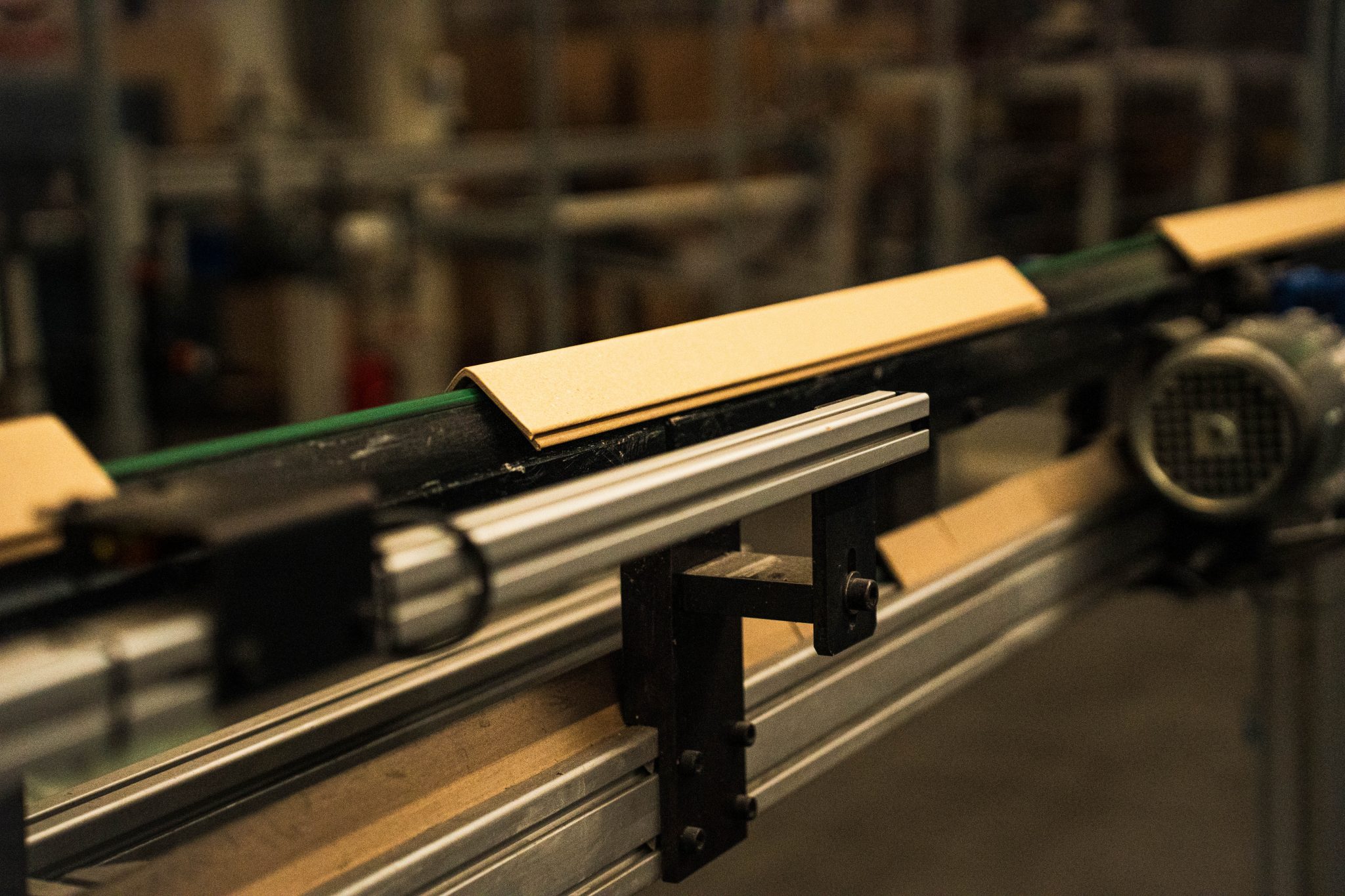
This version is designed primarily to protect edges and narrow surfaces—making it ideal for panels, door frames, or tabletops. They are easy to attach and, thanks to their double contact surface, provide reliable protection against abrasion and breakage.
L-profiles
Solutions for corner areas: The angled design is ideal for protecting frames or front-facing support points—such as on displays, glass frames, or metal frames.
Flat profiles
These cut-to-size sheets are exceptionally versatile: they can be used as interlayers, padding, edge protectors, or for surface padding. When combined with hard paper cut-to-size sheets, they provide comprehensive protection that stabilizes packaging and evenly distributes pressure.
Why protective profiles save money
Packaging is more than just protection during transport. It influences the entire flow of goods—from production to delivery to the customer. Smart protective profiles help reduce:
All in all, this results in a clear efficiency advantage—both logistically and economically.
Practical Guide: How to Use Protective Profiles
Mix and match—just the way you like it
Protective profiles made of hardboard can be cut to exact specifications—in length, width, thickness, and shape. This makes them suitable for a wide range of applications:
Sustainability is built in
All UPA Pack protective profiles are made from 100% recycled kraft paper—and are themselves fully recyclable. This conserves resources, protects the environment, and simplifies disposal. This is a real advantage, especially in tenders or within sustainability-focused supply chains.
And the solution also makes economic sense: paper protective strips are generally less expensive than plastic ones—yet just as effective.
Checklist: When is it worth using protective profiles?
If you can answer “yes” to these questions, using protective profiles is well worth it:
If you answer "yes" to one or more of these questions, you should take a look at UPA Pack's protective profiles.
Optimized inventory management through well-designed product protection
Storage space is a cost factor for many companies—especially when products have to be stored in a complex manner or repackaged multiple times due to a lack of protective measures. This is where protective profiles made of hardboard truly shine: they enable space-saving, secure stacking of delicate goods—without the need for additional layers of packaging. By providing targeted cushioning at contact points—such as between metal parts, painted surfaces, or glass fronts—protective profiles reduce the risk of scratches or indentations. This not only lowers the risk of returns but also allows for tighter storage: products can be placed closer together, as the profiles prevent friction and damage.
This is particularly effective, for example, in the warehouses of manufacturers of high-quality furniture components: here, flat or L-shaped profiles made of hardboard are used between each shelf. This protects the surfaces, reduces the stacking height per unit, and ensures better air circulation. These profiles have also established themselves as a cost-effective storage solution in the electronics industry and for sensitive plastic parts.
Making packaging processes more efficient
Unlike many molded parts, protective profiles are universally applicable—regardless of the product’s geometry. Whether rectangular, round, or custom-sized: UPA Pack manufactures protective profiles exactly to your specifications. This reduces the variety of packaging components in stock and simplifies logistics. Even small batch sizes or changing product lines can be packaged without any problems—a real advantage for companies with a varied product range.
In addition to simply protecting products, protective profiles offer enormous potential for optimizing packaging processes. Companies that have traditionally relied on conventional cushioning materials such as foam, Styrofoam, or complex plastic holders stand to benefit in several ways: through shorter setup times, simpler processes, and lower material costs.
Last but not least, process reliability is enhanced: The profiles are sturdy, torsion-resistant, and impervious to moisture—unlike alternative materials, which can warp due to temperature fluctuations or humidity. This ensures consistent packaging quality—regardless of storage or shipping conditions. This is particularly evident in the shipping sector: Pre-fabricated U- or L-profiles allow for the standardization of packaging steps.
Bottom line: Small profiles – big impact
Packaging doesn’t start with shipping. Thinking ahead when selecting protective materials pays off twice over: fewer damages, lower material costs, and more efficient shipping. Protective profiles, U-profiles, L-profiles, and flat profiles made of heavy-duty paper are therefore more than just packaging details—they are a strategic tool for optimizing packaging and reducing costs.
In addition, they meet the key requirements of modern packaging concepts: they are lightweight, recyclable, space-saving, and customizable—making them a genuine alternative to costly or environmentally problematic solutions made of foam or plastic. Protective profiles also offer benefits in terms of external communication: companies that visibly prioritize sustainable, well-designed packaging solutions strengthen their image and brand profile.
Protective profiles are therefore not just a “nice-to-have,” but an essential component of cost-effective, sustainable, and future-proof packaging processes. Companies that use them strategically not only increase efficiency but also gain a competitive edge.