

The cold season poses unique challenges for building material suppliers, construction companies, and construction site logistics: rain, snow, frost, and thawing weather can compromise material quality, disrupt construction site operations, and delay delivery schedules. Weatherproof, well-designed packaging is a critical factor in this context—ensuring the protection of goods, on-time logistics, and sustainability throughout the construction process.
With its hardboard corner protectors and PE-coated cut-to-size sheets, UPA Pack offers effective packaging solutions that reliably protect building materials even in adverse weather conditions—such as in winter.
Why building materials need special protection in winter
Environmental factors as a material risk
Winter weather conditions take a heavy toll on building materials:
Moisture, condensation, or snow can cause materials to become saturated, increasing the risk of mold and material deterioration.
Temperature fluctuations cause expansion and contraction—especially with panels, insulation materials, and wood products, the packaging can become brittle or develop leaks. Wind and snow cause mechanical stress during transport or storage. Without protection, edges can be damaged or parts can shift.
Systematic packaging therefore not only protects against visible damage but also preserves the material's integrity until installation.
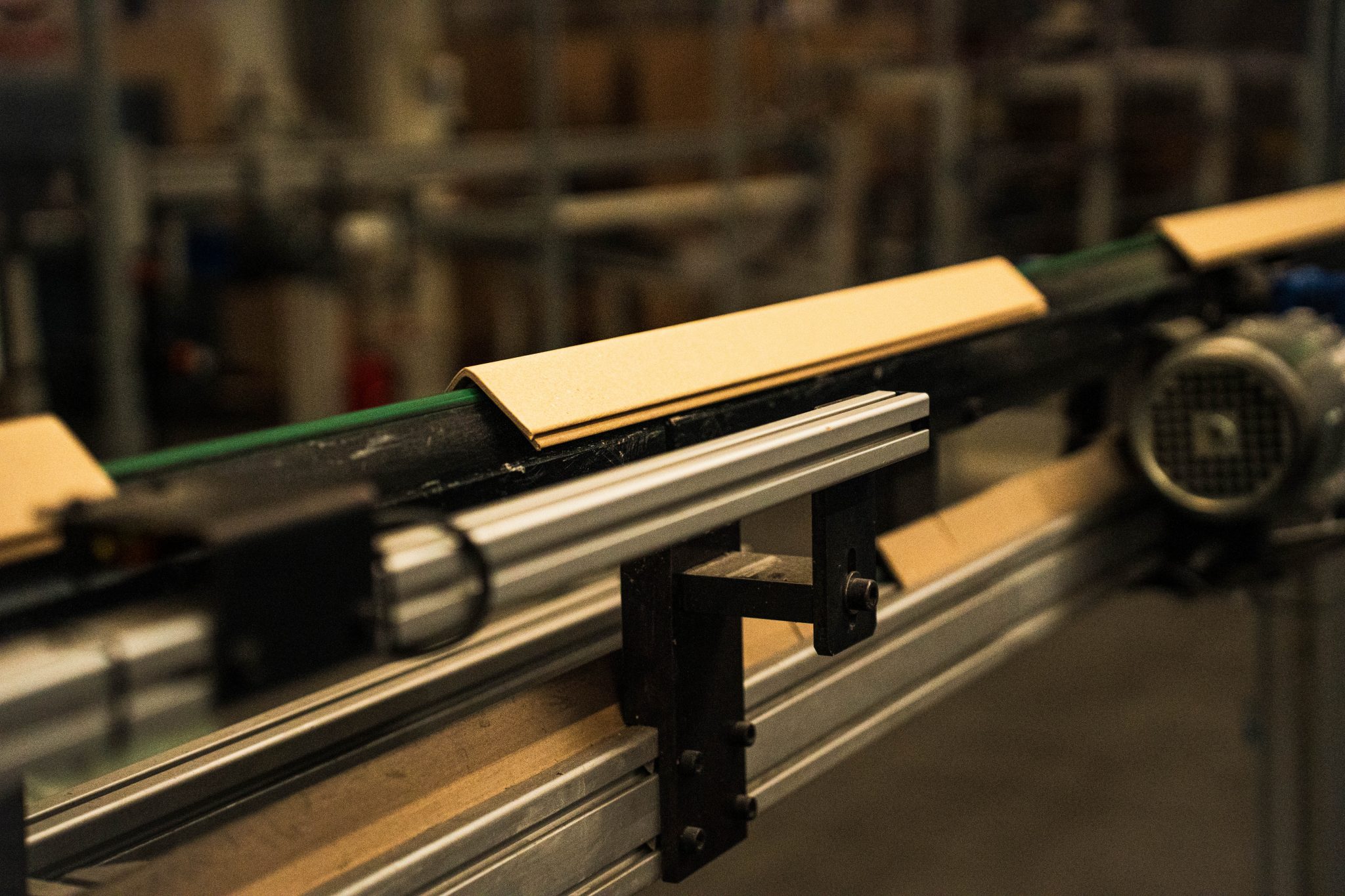
Cardboard corner protectors for sturdy corners and edges
The Role of Cardboard Brackets
Corner protectors made from recycled cardboard are the backbone of any winter-ready packaging:
When used with strapping bands, these corner protectors prevent cuts or dents on delicate product edges—even during multiple shipments or outdoor storage.
PE-coated sheets for surface protection
How PE coating works
Cuts made from PE-coated cardboard provide reliable surface protection:
The sheets can be cut to exact dimensions and used in a variety of ways—as a divider, top or bottom sheet, or as a divider between multiple layers of packaging.
Enhanced Benefits for Logistics and Construction Site Efficiency
Logistics optimization through weather-resistant packaging
Real-world case studies
Sustainability and Cost-Effectiveness
Recyclability reduces construction site waste and simplifies disposal.
Eliminating plastic film saves approximately 40% in costs compared to conventional solutions.
Longer-lasting material protection reduces return rates and complaints, directly impacting budget and handling costs.
Image and Calls for Proposals
Companies that use sustainable packaging solutions score points with customers, building authorities, and large-scale projects with an environmental focus—a decisive advantage when it comes to contract awards and choosing partners.
Practical Tips for Winter Operations
Packaging as an integral part of construction site planning
The choice of the right packaging solutions should be considered not just at the time of loading, but already during the planning of construction site logistics. Especially in winter, weatherproof packaging often determines whether materials arrive ready for immediate use or must be temporarily stored or dried—a process that is both time-consuming and costly. Packaging elements such as corner protectors and PE-coated cut-to-size sheets can be integrated into the supply chain early on—for example, through pre-assembly in the warehouse or by specifying them in tenders and supply contracts. This turns packaging into a predictable element for quality assurance and on-time delivery. Subcontractors on the construction site also benefit: materials are immediately identifiable, protected, and can be processed further without additional effort. Those who adopt this integrated approach not only reduce damage but also minimize friction losses—and, as a bonus, increase efficiency on winter construction sites.
Conclusion: Winter-ready packaging is subpar
Winter construction requires more than just weather-resistant products—it demands holistically planned solutions that safeguard processes and reliably protect materials. Edge protection brackets made of heavy-duty paper and PE-coated cut-to-size sheets are more than just packaging components. They can be systematically integrated into construction site logistics, thereby supporting smooth operations—from shipping and temporary storage to on-site installation.
Packaging thus becomes an active component of quality assurance, a time-saver on the construction site, and a sustainability feature for building owners or public contractors. Robust, field-tested, and easy to use, these solutions make a measurable contribution to safety, efficiency, and schedule management on winter construction sites.
Choosing weatherproof packaging early on protects not only your materials—but also the progress of your construction project.