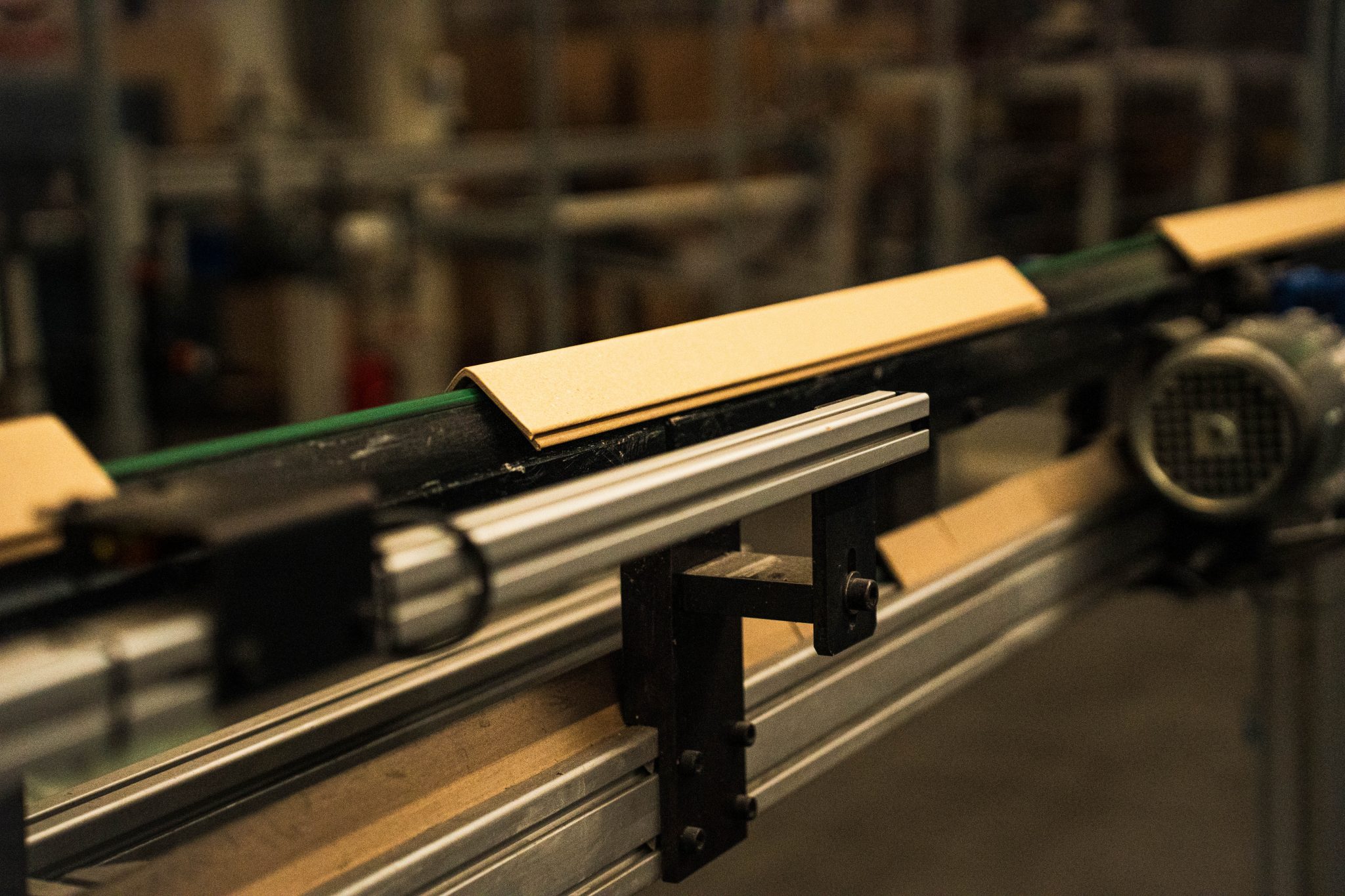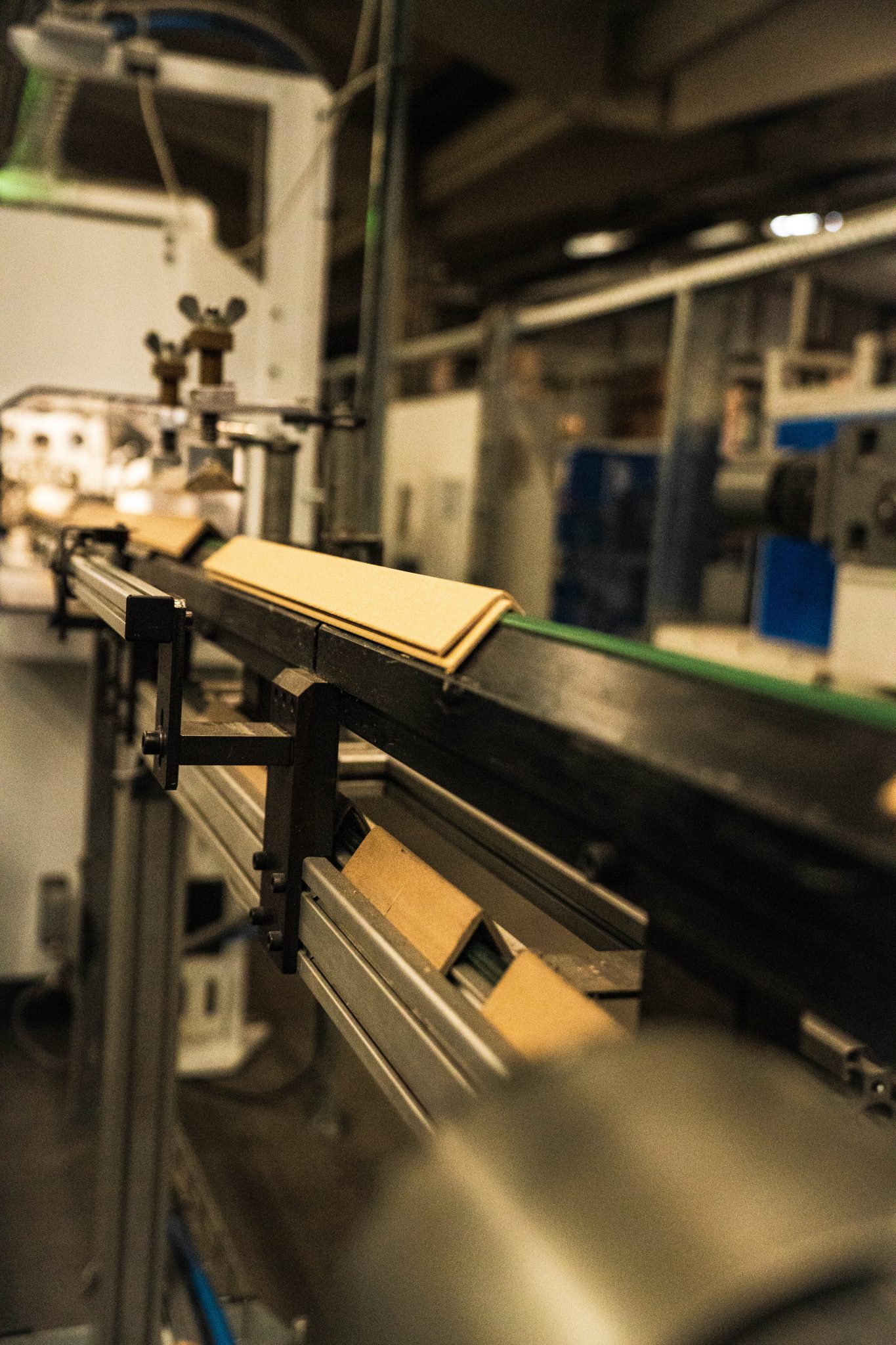

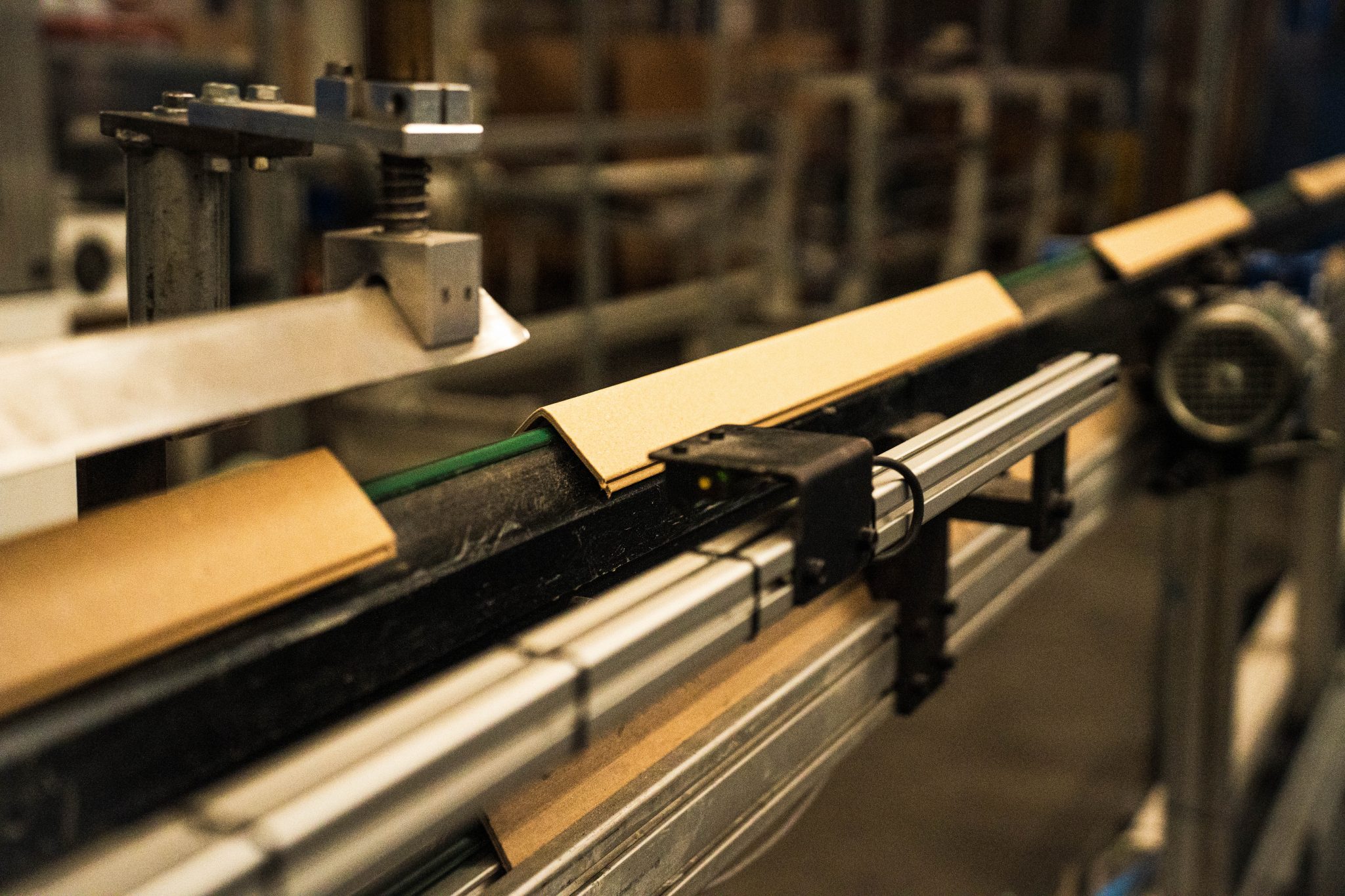

During transport or storage, damage to the edges can occur. That is why it is important that sensitive products, in particular, have reliable protection. A corner protector offers the perfect solution here. It protects boxes and stabilizes pallets, ensuring that fragile goods are optimally secured. Corner protectors are available in several different materials. The focus is on corner protectors made of solid cardboard and those made of plastic. Both options have their advantages and disadvantages. In this article, you’ll learn how these two options differ and which one is the better choice.
What is an edge protector?
A corner protector is a sturdy, L-shaped protective strip. It can be attached to the corners and edges of various products. The goal is to prevent damage during transport or storage. Corner protectors are usually made of solid cardboard or plastic. Using these protectors distributes pressure evenly across the edge, so impacts and friction are no longer a problem. They also increase stability when stacking on pallets.
Overall, it can be said that corner protectors are designed to secure products. They are effective and versatile in their application. They also stand out for their ease of use.
Why is edge protection so important?
This question is easy to answer: Corner protectors safeguard exactly what matters most to you. It’s not uncommon for packages to bump into things during shipping or storage. Without protection, the edges can quickly become damaged. Not only does the package look unsightly afterward, but the product inside can also be damaged. Corner protectors ensure that pressure is distributed evenly. This helps prevent dents.
If you want your package to arrive safely at its destination, you should definitely equip it with corner protectors. Especially when dealing with fragile goods, corner protectors are a must. With the right edge protection, you can avoid complaints, costs, and a lot of hassle. It’s a small investment with a big impact!
Solid cardboard corner protectors – Features and benefits
Solid cardboard corner protectors are a popular choice across many industries. They combine durability with sustainability. They are also very easy to use. If you’re looking for an eco-friendly packaging solution, solid cardboard corner protectors are the way to go. They’re easy to apply and offer outstanding protection. After use, they can also be easily disposed of. You can use solid cardboard corner protectors in storage, on pallets, or even for shipping. Solid cardboard offers several advantages that quickly become apparent in everyday use. Here are a few of them:
They are ideal for light to medium-weight goods. They are also very easy to cut to size and customize. Another advantage is that custom sizes are available. Solid cardboard corner protectors safeguard your products without adding extra weight. The applications are virtually limitless.
Plastic Edge Protectors – Features and Benefits
Plastic corner protectors are also widely used. They are highly durable and retain their shape even when wet. This is particularly useful for heavy products. However, it’s important to note that plastic corner protectors also come with a few drawbacks. For example, plastic is not biodegradable. This means that disposal is much more complicated. Furthermore, manufacturing it requires a significant amount of energy.
In addition, plastic corner protectors are often stiff. This can be a problem for delicate or lighter products. Nevertheless, we have summarized some advantages of plastic corner protectors for you:
Plastic is particularly well-suited for heavy products. It is also a reliable choice for outdoor use.
A Comparison of Sustainability: Solid Cardboard Corner Guards vs. Plastic
Sustainability plays an important role in today's world. Companies are also looking for eco-friendly solutions when it comes to packaging. There are significant differences in the materials used for corner protectors in this area
Solid board – eco-friendly and recyclable
When it comes to eco-friendly solutions, solid cardboard is the ideal choice. It is almost always made from recycled paper. Its production requires very little energy. After use, it can easily be reused. It is even possible to compost solid cardboard. The material is completely biodegradable. This means that solid cardboard leaves no harmful waste behind. For companies committed to sustainability, solid cardboard corner protectors are therefore the perfect choice.
Plastic – durable, but not biodegradable
While plastic is durable, it comes with significant drawbacks. Without a recycling system, it ultimately ends up as hazardous waste. Its production also consumes a great deal of energy, placing a heavy burden on the environment. Although plastic can be reused multiple times, it still falls far short of the environmental friendliness of solid cardboard.
Which edge protector is best for which application?
The intended application plays an important role in the choice of material. A solid cardboard corner protector is ideal for dry storage conditions. It is also the perfect choice for long transport routes and single-use packaging. This corner protector is frequently used for light to medium-weight goods.
A plastic corner protector is frequently used in damp and wet environments. Plastic is the ideal material for repeated use. This type of corner protector is also increasingly used for heavier products.
Solid Cardboard vs. Plastic Edge Protectors – Processing and Handling
It’s not just the material itself that matters. Ease of use is also important. Of course, it’s an advantage if the edge protection can be installed quickly and easily. Every minute counts in everyday life. Flexibility is the top priority. Some solutions are easier to adapt to different products. Others require more planning and precise measurements.
Handling of solid board:
Handling Plastics
A Comparison of Value for Money
Price is also an important factor when purchasing corner protectors made of solid cardboard or plastic. Compared to plastic, solid cardboard is usually less expensive. This can be particularly worthwhile if you need to purchase larger quantities. Plastic is slightly more expensive. Be sure to weigh the costs before making a purchase. Also take into account disposal or return.
Summary – The Key Differences at a Glance
Both materials have different properties. The following overview shows the key differences side by side, making it easier to decide.
| Material | recyclable | PE or PP |
| Environmental friendliness | very high | medium |
| Load capacity | medium | medium |
| Water resistance | medium | high |
| Reusable | in some cases, yes | medium |
| Price | inexpensive | high |
| Applications | light to medium-weight goods | heavy cargo |
The material you choose depends on your specific needs. While plastic offers good stability, it is not a versatile material. It also falls short of solid cardboard in terms of environmental friendliness. Solid cardboard edge protectors are very easy to work with. They are durable and provide the necessary strength. If you want to be environmentally friendly while also saving money, solid cardboard edge protectors are the better choice.